
Charlotte “Lottie” Welch was born on 17th January 1885 in Purton Stoke, Cricklade the 8th of 11 children born to Thomas Welch and Hannah Goodall.
When the 1891 census was taken Lottie was living with her family at Pond Farm, Purton Stoke where her father Thomas was working as a farm labourer. Ten years later she was living with her 86 year-old grandmother, Mariah Welch, as Mariah’s caretaker in Chelworth. Next door was Thomas, Hannah and her three youngest siblings. Thomas had taken over his late father’s farm.
In 1901 Lottie’s sisters Emily and Bessie (Elizabeth Jane) were both employed as Kitchen-maids in service in London. Sister Nellie (Mary Ellen) was probably also in service but I have been unable to find her in the census records.
By 1904 Lottie had followed her sisters to London and was employed by the Harris family in Wood Green. She foiled the theft of a ring in late October 1904. The theft was reported in the Islington Gazette of 27th October:
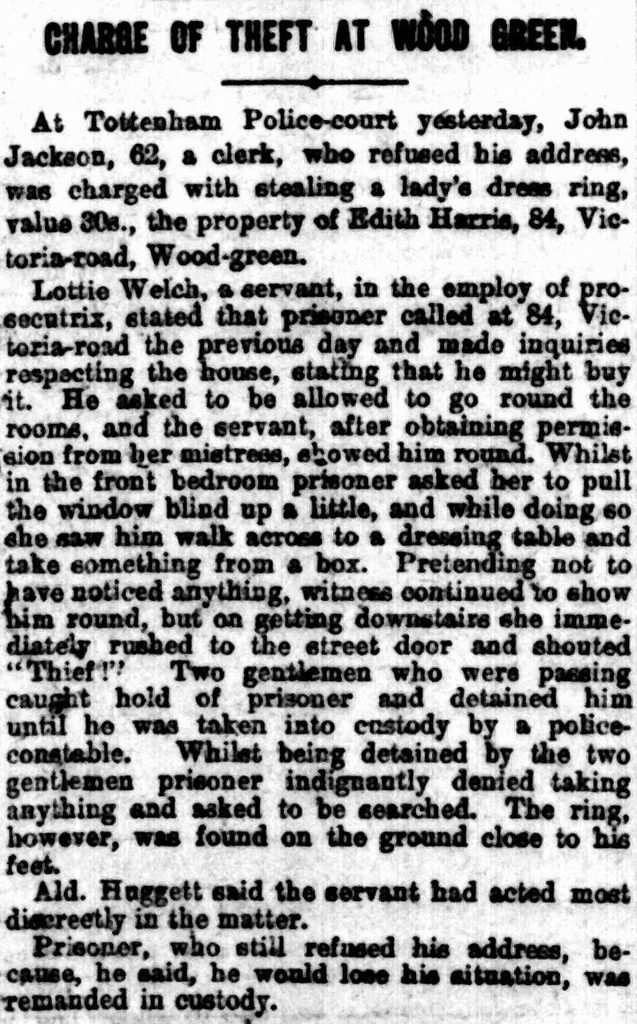
John Jackson had also used the same modus operandi to steal a gold watch, chain and ring from a house in Hornsey. In January 1905 he was sentenced to three years’ penal servitude.
Despite her heroics life was about to get very difficult for Lottie. She would shortly find herself in trouble and out of employment. She likely lost her position when the Harris’s moved (probably separating as they were living apart when the 1911 census was taken) and by the end of the year she was unmarried and pregnant.
The father of her unborn child was Private Reginald Stancliff Newbold of the Coldstream Guards. Their son Percy was born on the last day of August in 1905. When Lottie registered his birth she presented herself as Mrs Charlotte Newbold. This allowed her to record Reginald as Percy’s father and make his birth appear legitimate (also making things very difficult for future family historians!). Percy was registered as Percy Reginald Leopold Newbold. Reginald abandoned Lottie and their son leaving her facing destitution.
Women in Lottie’s position often entered into an “irregular relationship” as a way to avoid the workhouse or a life of prostitution and Lottie took up with Christopher Rock. Christopher had recently been discharged from the Irish Guards and was working as a railway porter. Lottie and Christopher were married in Paddington Registry Office on 4th July 1906. At the time they were living at 45 Alfred Road. The witnesses to the marriage were Sarah Grace Irons (in 1911 Sarah was a foster mother living at 19 Woodfield Crescent) and Robert Briffett a house painter.
Lottie and Christopher’s daughter Doris Amy was born on 22nd August 1906 at 1 Windsor Street. Christopher is recorded as being employed as a carriage cleaner. A second daughter, Catherine Helen, was born on 19th June 1908 by which time the family had moved to 398 Portobello Road.
On Saturday 6th March 1909 a very drunk Christopher was refused service in the Porchester Arms, Paddington. He struck a screen, smashing a plate-glass window and a load of glasses, and hit a man who tried to stop him escaping. Christopher was ordered to pay a fine and costs or face 1 month’s hard labour in prison. He may well have lost his job at this time and things would have been hard for the family. Christopher briefly worked as a doorman at a picture house before getting a job as a platform conductor in May 1909. A little over a year later he was sacked for leaving his shift without permission and not turning up at work for a couple of days.
In late 1911/early 1912 the family moved to a bedsit in 17 Lionel Mews. At about 10pm on Saturday 2nd March Christopher returned home to find their neighbour Sydney Tucker at the bedsit. Christopher’s violent reaction to finding him there forced Lottie to flee. To gain admittance to the workhouse or to later file for divorce she would have had to demonstrate that her husband’s actions made it impossible for her to continue living with him. On 16th March Lottie summoned Christopher to the West London Police court to seek a separation order for constructive desertion (meaning that she had not left of her own volition but had been forced out by Christopher’s behaviour). The magistrate dismissed the summons after she admitted being found with a young man at 10pm at night.
“The Suffragette” of December 13th 1912 shows Lottie made a 10s contribution to the Women’s Social and Political Union’s (WSPU) £250,000 Fund (Bow and Bromley by-election). The by-election had taken place on 26 November 1912 with WSPU supporters campaigning around George Lansbury’s “Votes for Women” candidacy. Lottie’s 10s donation to the campaign was recorded as a contribution to the WSPU’s £250,000 Fund.
On the 20th March 1913 Christopher petitioned for divorce naming Charlotte as Respondent and Sydney Tucker as Co-respondent. The Honourable Sir Henry Bargrave Deane heard the case on 17th November 1913 at the Royal Courts of Justice, Strand, and granted Christopher a decree nisi. The judge also ruled that Doris and Catherine were to remain in the custody of their father. The decree was made absolute on 25th May 1914 with Charlotte colluding to obtain a divorce. Christopher married his mistress a few weeks later.
According to my mother Lottie worked in a munitions factory during the war but I have been unable to corroborate that.
On 24th August 1915 Lottie married Charles Carson in Paddington Registry Office. Charles was recorded as being a soldier in the Grenadier Guards but he had actually deserted on 18th June. It was easy for a deserter to disappear into the civilian workforce and Charles was probably working as a casual labourer to avoid leaving a paper trail. It is unknown why he deserted. It could have been dissatisfaction with army discipline, boredom, or because he would earn a lot more money as a labourer (typically 3 to 4 times the soldier’s basic pay). It is impossible to know how much Lottie knew about his desertion. Charles was a consummate liar. He would change his personal details – occupation, date and place of birth etc. – to suit his agenda and had a highly practised back story each time. Many considered that deserters whose Regiments had not yet gone abroad were simply taking extended leave but any such sympathy would have evaporated when his Battalion (3rd) left for France in the second week of August. One man who went with it was William Henry Hitchings the husband of Lottie’s sister Sarah Ann. It must have been very uncomfortable for Lottie to know her husband was a deserter whilst her sister’s husband was away fighting. By the time of their marriage hiding was becoming increasingly difficult. In August the implementation of National Registration Act had required every citizen aged 15 to 65 to register their employment status and personal details. It would have been hard for Charles to avoid registering. He may have married to be treated more leniently if he was caught and Court Martialed.
At the time of their marriage Lottie and Charles were lodging at 6 Windsor Gardens. The witnesses were Violet Jane Bosley and their landlady Mary Buckley.
By October/November the net was beginning to draw in around Charles. The Derby Scheme saw canvassers knocking on doors asking eligible men to publicly attest to volunteer if called upon. On 16th November Charles gave himself up and returned to his regiment. Having returned voluntarily Charles would have been treated more leniently that if he had been caught by the police. He was arrested and on 22nd was tried by District Court Martial. Charles was found not guilty of desertion but guilty of ‘when on active service absenting himself without leave’. He was sentenced to detention for 112 days. He served his detention in Aldershot Detention Barracks. 28 days of his sentence were remitted by his commanding officer and on 21st January 1916 Charles was transferred to the 3rd Battalion and embarked at Southampton to join the Expeditionary Force in France. On 3rd February Charles was transferred into the 7th Entrenching Battalion and he joined the Battalion in the field on 7th April. Typically men transferred to the labour battalions were not fit for front line duties but some were transferred because they were difficult or unwanted. It is possible he was transferred because of resentment and anger towards him from his comrades.
Another man who went to France in August 1915 was Reginald Newbold who had re-enlisted into the Coldstream Guards. Reginald spent a short time in the 7th Entrenching Battalion before joining the Cadet School as servant to Captain Jackson. They briefly were both serving in the Battalion at the same time (3rd – 7th February 1916).
Lottie was added to the married roll and to the list of the regiment’s Ladies’ Welfare Committee whose goal was to care for the families of soldiers who were serving overseas. Some evidence of Lottie’s interaction with this committee has been preserved in Charles’s service record. From that we know that Lottie moved to 36 Chippenham Road in September 1916.
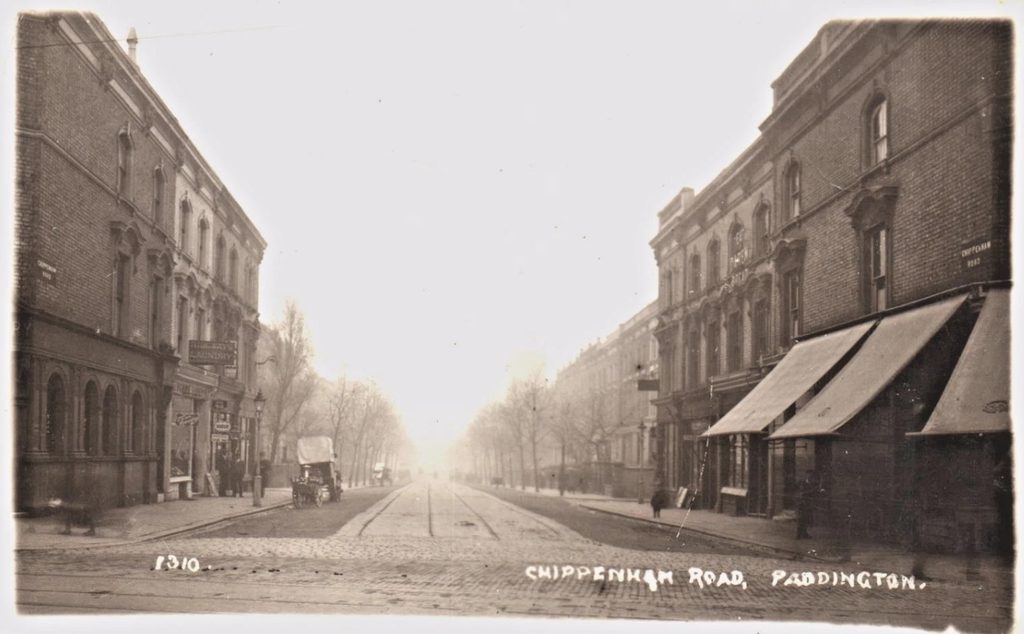
The committee held family gatherings, teas, and packing sessions and after one such tea on 15th November the Secretary wrote to Mrs Stucley:
“Mrs Carson, wife of 20521, has not heard from her husband since September, and is very anxious. She has not been notified of any casualty, but perhaps the R.O.R. have some information.”
On 25th November the secretary wrote to Lottie:
“Dear Mrs Carson,
Lady St Cyres was so sorry to hear of your anxiety about your husband, and has been making all possible enquires about him through the Regimental Orderly Room. This morning she hears as follows:
-20521 Carson. As far as is known he is still with the 3rd Battalion. No casualty has been reported.-
I think therefore you may take it that he is all right, and I hope you have heard from him by this time. Please let us know. Probably the irregularity of the posts lately accounts for the long delay in getting letters.”
Two days later Lottie wrote to tell Vicountess St. Cyres that she had finally heard from her husband.
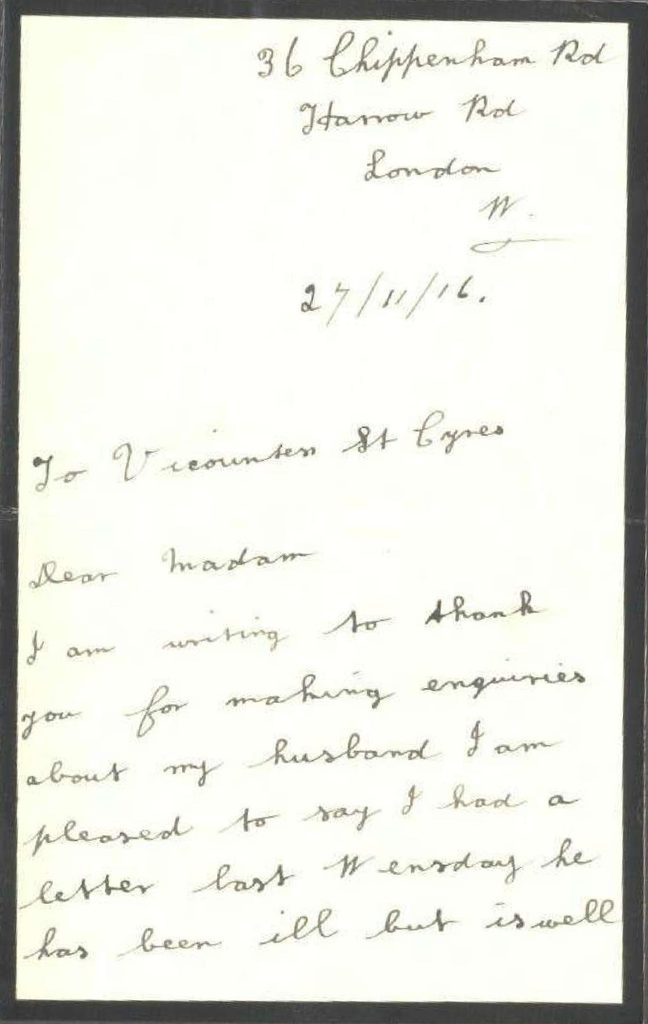
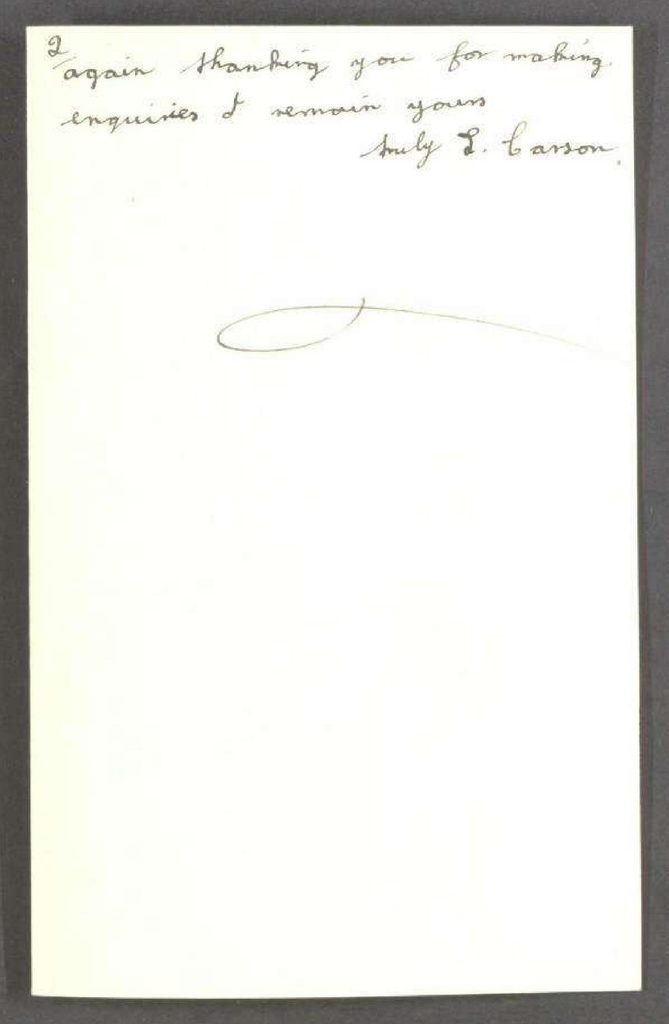
Lottie’s brother-in-law William Hitchings died in France of bronchitis and nephritis on 8th February 1917. He is buried in Grove Town Cemetery, Meaulte.
Her son Percy started to get into trouble and sometime after June 1917 (much of which month he spent in the receiving homes at Hornsey Rise under the alias Edward Clarke until they discovered his real name) he was sent to an industrial school in Manchester.
Charles received 10 days home leave in late August 1917 and 14 days in September/October 1918. On 23rd February 1919 he volunteered to serve one year with the armies of occupation. The following month he was attached to the Military Foot Police in Boulogne. Lottie seems to have realised that he was not going to return to her and she left the address in Chippenham Road in February and returned to her old lodgings and friends at 6 Windsor Gardens. Charles received further leave from 6th to 20th June. It is not known if he spent this leave with Lottie or if he told her of his decision to re-enlist into the Military Foot Police (M.F.P.). He knew that she was living at 10 Woodfield Crescent by this time as that was the home address he gave on his Attestation Form.
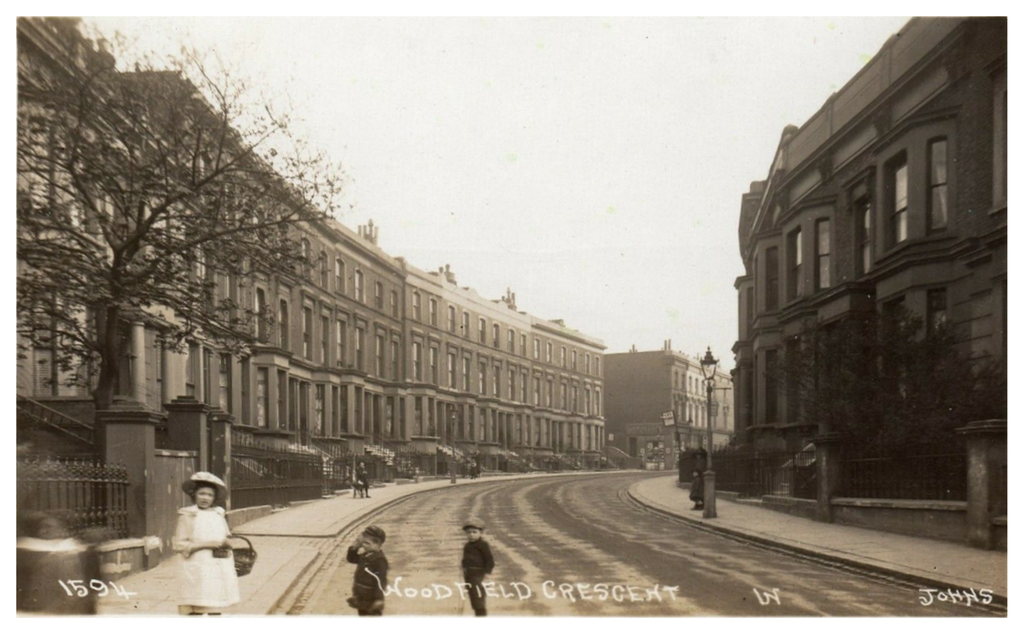
Charles was discharged from the Grenadier Guards on 7th July to allow him to re-enlist into the Military Foot Police which he did in Boulogne the following day. He gave Lottie’s address, 10 Woodfield Crescent, as his residence but he had created a whole new backstory for himself with a different place and date of birth and a different occupation. He also claimed to have served with the Grenadier Guards for 3 years in the early 1900s but there is no evidence of this and he never made such a claim when he enlisted in 1914. The only reason I can think of him doing this would be to boost his pensionable time to be eligible for a pension at the end of his period of service with the M.F.P. He must have felt fairly confident that checks would not be made with his former regiment. Charlotte was not added to the married roll when he enlisted. For Lottie to have been placed on the married roll Charles would have had to have produced their marriage certificate and that would have carried the risk of someone noticing the age disparity between that which he gave when he enlisted and that shown on the certificate. The only constant between his old and new identities was his name which would have been impossible for him to change. Charles returned to England on 25th July. Eight months later he was posted to Egypt.
Lottie was finally added to the regiment’s married roll in October 1920. In the early 1920s, the British Army undertook a major centralization and consolidation of its First World War personnel and administrative records. Charlotte may have been added to the roll when Charles’s records were processed and it was found that she had been on the married roll for the Grenadier Guards. The details of the marriage would have simply been copied forward without the need to review the actual certificate. Being placed on the married roll would have entitled Charlotte to married accommodation with her husband or an Army Separation Allowance if Charles’s posting was to somewhere where wives could not accompany their husbands. When Lottie was placed on the roll the Army would have invoked Section 145 of the Army Act to ensure Lottie did not become a burden on public poor relief and mandatory “stoppages” would have been taken from Charles’s pay and paid directly to Lottie.
When the 1921 census was taken on June 21st Lottie had a visitor, George Gardiner, staying with her. George was an Old Contemptible and career soldier with the Grenadier Guards. He had been wounded in May 1918 resulting in a leg being amputated. The Paddington Workhouse Infirmary, just a stone’s throw from Charlotte’s home, had been converted into a hospital with 300 beds for limbless men. It is not known if George was treated there but there is a good chance that he was and Charlotte’s links with the regiment’s welfare committees may explain how they came to meet. She may well have known his wife Annie too from the social events organised by the Ladies’ Welfare Committee during the war. George was finally discharged from the Guards in December 1920 by which time he had separated from his wife. The Pension Index card created for him in January 1921 gives his address as 10 Woodfield Crescent. After his discharge he was employed by the Ministry of Pensions as a Ward Master at Queen Mary’s Hospital, Roehampton. The census return shows that Lottie and George were occupying two rooms at number 10.
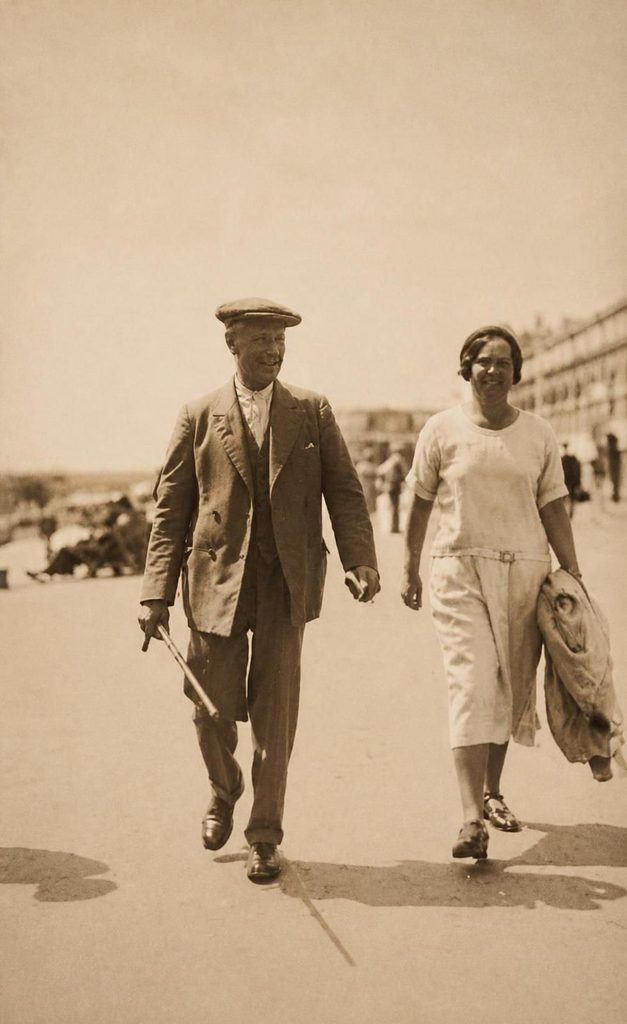
The army’s consolidation of its records and the combining of both sets of his papers had created a ticking time bomb for Charles. If someone compared the two they would spot the discrepancies.
If Charles discovered and reported that Lottie had begun cohabiting with another man, the military authorities would immediately review the case. Once the military authorities were satisfied with the evidence, they would strike her off the maintenance ledger and the compulsory “stoppages” from the Charles’s pay account would cease. There is no record of her being removed from the roll. Even if he knew about George it was not in Charles’s interests to rock the boat and have his lies discovered so instead he decided to turn the situation to his advantage.
Charles had a mistress in Egypt. Having discovered that Lottie had been added to the married roll Charles decided to exploit this. He tried to pass off this other woman as his wife and obtain military accommodation for her. If he had succeeded it would also have stopped the deductions from his pay for Lottie because his ‘wife’ was with him. On 12th September 1921 Charles was severely reprimanded for conduct to the prejudice of good order and Military Discipline i.e. endeavouring to obtain public accommodation for a woman not his lawful wife. This was an incredibly serious offence. It was fraud and a serious breach of military discipline. His punishment could have been much more severe. That he only received a severe reprimand may have been due to the fact that he was good at his job and the M.F.P. in Egypt were short of experienced men. The stoppages for Lottie would have continued until his discharge or until she was proved to be co-habiting with George. Lottie and George were discrete, Lottie continued to go by the name Carson and George probably also had accommodation at Roehampton. It also seems very unlikely that Lottie’s friends would betray her to Charles.
Charles was transferred to Malta in February 1924. In Malta he was severely reprimanded twice more. On the second occasion it was also recommended that he be removed from the Military Foot Police. Charles was discharged with no gratuity or pension and was not transferred to the reserves. His gratuity was forfeited under Article 958(g) – lying about his age on enlistment. Charles gave his intended address on discharge as the Union Jack Club in London. Having been discharged Charles, true to form, re-invented a new back story for himself and disappeared. If he remained in England it was under a different name. I think it more likely that he lived abroad.
Lottie’s son Percy enlisted into the army, as Percy Reginald Carson, on 21st July 1924. He served with the Royal Scots Greys. Percy married Helen Slater Coull in Edinburgh and their daughter Cynthia was born on 15th Feb 1930. Percy died from injuries sustained during a riding accident at Tidworth on 20th Mar 1932. Helen married another member of the Scots Greys at the end of the year and Cynthia went to live with Lottie.
Lottie had remained living near her first husband, Christopher, and her two daughters so she was there for them when each of them were turned out by Christopher after they left school. My grandmother was estranged from her father and said nothing more about him other than that he was a cruel man. My mother never met him but George was a grandfather to her. My mother stayed with Lottie and George at the end of 1932 when my grandmother was expecting another baby. George was very tolerant of the inquisitive little girl who was fascinated by his artificial leg!
Lottie’s sister Emily had remained in service in London as a cook. The 1911 census reveals her working at 33 Hyde Park Gate for Robert Chalmers, Chairman of Board of Inland Revenue. By 1921 she was Cook to the Australian widow Margaret Jane Abercrombie and living at 6 Orsett Terrace Paddington. Emily never married but her will stipulated that the ring she always wore was not to be removed at her death perhaps hinting at a lost sweetheart. Emily died on 13th March 1936 at King’s College Hospital. Lottie was with her when she died and registered her death.
The 1939 register shows George was now employed as an orderly at the hospital and that young Cynthia had been sent to stay with Lottie’s niece Edith, her husband Mervyn Martin and 3 young children in Cricklade.
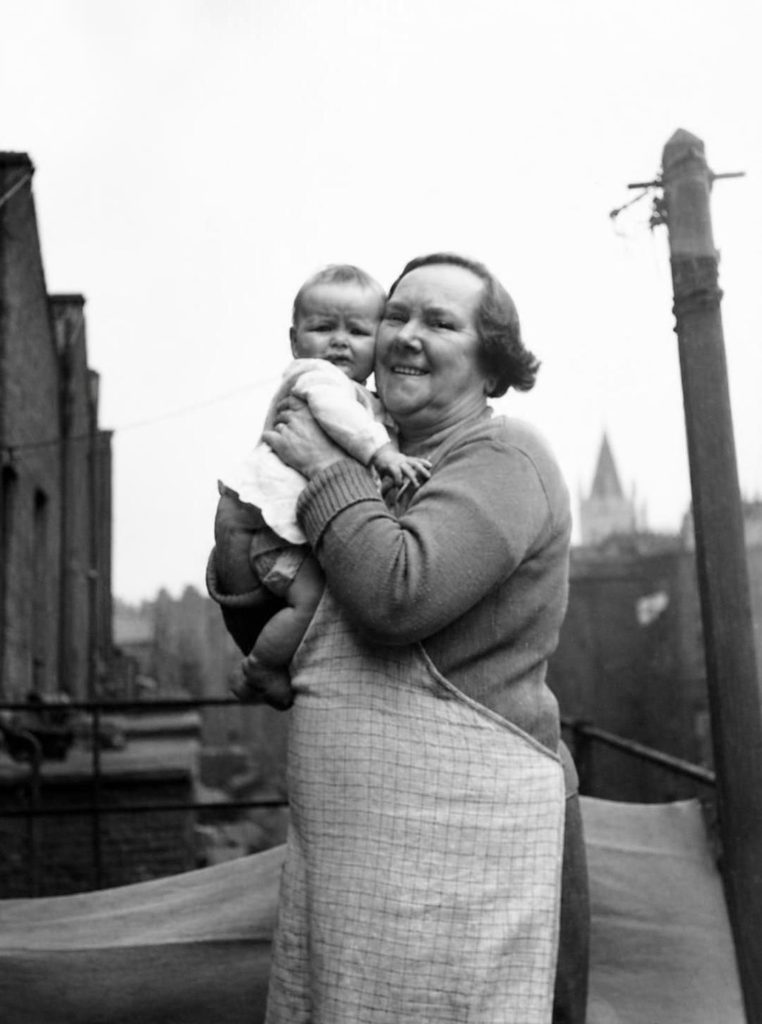
Lottie and George remained together living at 10 Woodfield Crescent until his death there, from a ruptured specific aortic aneurysm, on 5th August 1953. His death was registered by Lottie’s grandson Reggie Lambert the following day. He had described George as a “trainer in a hospital for the disabled”.
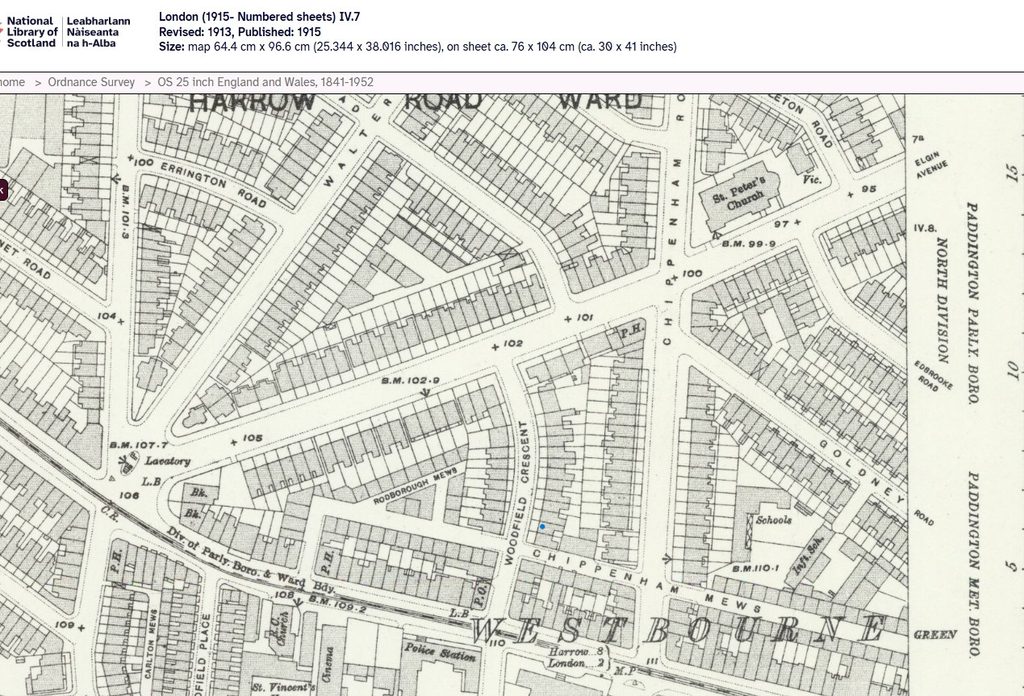
The houses in Lottie’s neighbourhood were built in the 1860’s on 100 year leases. As the end of the leases approached landlords abandoned the upkeep of the buildings. The triangle between Harrow Road, Elgin Avenue and Chippenham Road, which included Woodfield Crescent, contained some of Paddington’s worst housing. Compulsory purchase orders were issued by Greater London Council and Lottie had to leave her home of 47 years. The houses were demolished in 1966 to make way for 300 flats and maisonettes.
After leaving Woodfield Crescent Lottie found lodgings at 37 Lydford Road. She lived there until her admittance to St Mary’s Hospital, Praed Street where she died on 9th March 1970. Her cause of death was given as exhaustion, sub-acute obstruction of bowel and carcinomatosis (Colon). Lottie was Cremated on the 13th at West London Crematorium.
Here are a couple of films showing Paddington in the 1960’s prior to it’s redevelopment.