
My great grandmother Mary Troke was the daughter of Charles Troke and Fanny Luther. This page tells the story of the Troke side of the family.


Henry Troke My 7th Great Grandfather
Our family’s earliest known Troke ancestor is Henry Troke. Henry and an unknown wife had 5 children. Mary, Henry, Edward and James were baptised in St Andrew’s Church, Kinson. No baptismal record has been found for Richard:
Richard died Canford Magna, December 1732, buried All Saints, West Parley 5th December 1732.
Mary baptised on 16th January 1687.
Henry baptised on 15th June 1690.
Edward baptised on 18th Mar 1694.
James baptised on 5th December 1697, buried Holdenhurst 25th December 1752.

Edward Troke died 1713 Simon Troke died 1714 My 1st cousins 8x removed
Edward and Simon were the sons of Simon and Rachel Troke. Edward was a blacksmith in West Parley and Simon, a wheelwright in Ensbury. In 1711 the brothers , sold a 980 year lease on the close called Great How in Wood Town, West Parley to Mr Roger Bramble. Their father Simon had purchased a 1000 year indentured lease on the close from my 7x great grandfather Richard Corbin in 1695. According to the 1711 indenture the will of Simon the father decreed that his estate was to be divided equally between Edward and Simon after the death of their mother and that the brothers had reached an agreement as to how to divide the estate on 28 September 1710. In consideration for the lease Simon received £90 and Edward 10 shillings. Interestingly Simon made his mark whilst Edward signed his name.
Edward died in 1713. The inventory of his goods and chattels has survived but unfortunately the associated will has not.
Simon did not survive his brother for long. A widower (his wife Mary was buried on 16th October 1713) Simon died intestate the following year. Henry Kelloway was made guardian to their daughters Mary, Jane and Alice Troke and was granted administration of Simon’s estate on 5 Jul 1714. The 1717 abstract of the estate of Popish recusant Sir John Webb of Great Canford lists Symon Troke as holding a lease to a garden plott of twelve luggs on Ensbury Green, East How but paying no rent.
Edward and Simon were probably the nephews of my 7th Great Grandfather Henry Troke.
James Troke 1697 – 1752 My 6th Great Grandfather
James was a blacksmith in Greater Canford. He married Katherine, daughter of Richard Corbin of Wood Town, West Parley. Katherine’s elder sister Ann was married to Simon Dean a butcher in West Parley.
James and Katherine had at least six children:
Bette baptised St Andrew’s Church, Kinson 20 Apr 1725
James baptised St Andrew’s Church, Kinson 23 Jan 1727
Anne baptised St Andrew’s Church, Kinson 29 Apr 1730, buried West Parley 26 Feb 1733
William baptised St Andrew’s Church, Kinson 9 Sep 1733, buried West Parley 30 Sep 1733
Richard baptised St Andrew’s Church, Kinson 27 Apr 1736
William baptised St Andrew’s Church, Kinson 6 Apr 1738, buried Holdenhurst 8 Mar 1818
Richard Troke’s will of 1732 bequeathed £12 to be divided equally among James’ four children. Unfortunately the children are not named. James and Katherine must have had another child born before November 1732.
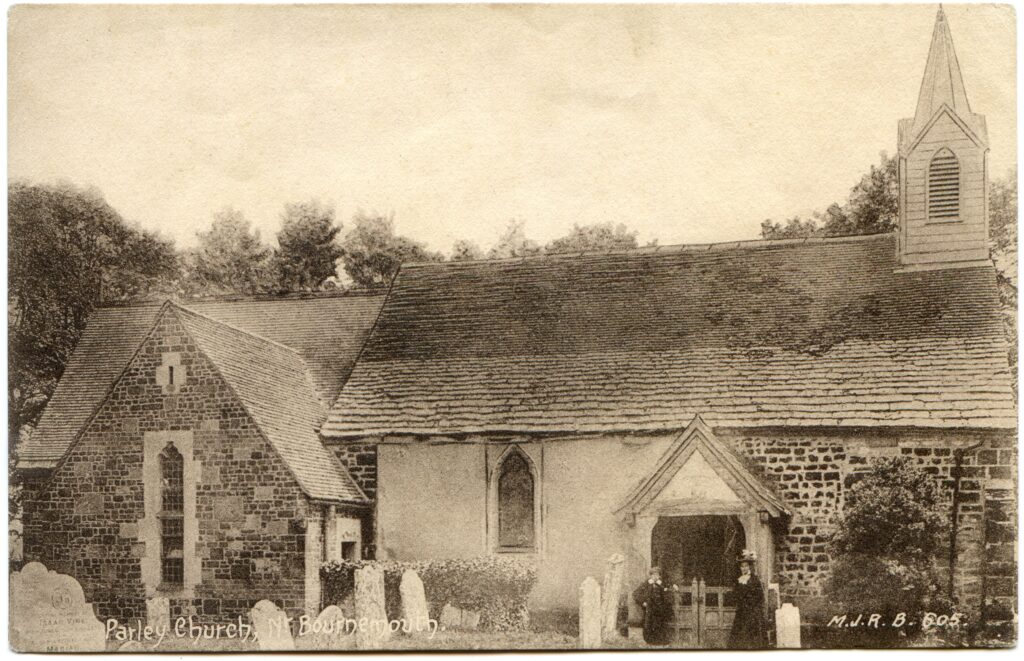
In 1729 James Troke and Simon Dean divided Woodtown Farm between them in lieu of the £100 which Katherine was due from her father’s estate.
Katherine died in 1741 and James in 1752. They are both buried at Holdenhurst.
Henry Troke 1690 – ? My 6th Great Granduncle
On 9th April 1715 Henry Troke, a mariner, leased ‘a cottage (now taken taken down) and two gardens’ at Ensbury, Canford Magna from Sir John Webb, 3rd Baronet Odstock and owner of the Canford Estate. Mentioned in the lease were Henry’s daughter, Mary, and brother Edward. Mary had been born the previous year.
The Webb family and the Forfeited Estate Commission
The Webbs, from whom Henry leased his garden plots, were Roman Catholics and the estate, valued at £300 per annum in 1641, had been sequestered in 1644. As the estate was still owned by the family in 1715 they must have paid a fine (typically around 2/3 of the value of the estate) to have the estate returned to them. In 1715 George I required every Catholic to register his name and real estate providing details of the property, owner, value and occupier. The “Act to oblige papists to register their names and real estates” (I. Geo. I. St. 2. c. 55) was passed after the 1715 Stuart Rebellion with the view to confiscate 2/3 of every estate. Sir John Webb’s return (Forfeited Estates Commission document FEC1/1144) included details of the garden plots leased by Henry.
Henry Troke holds by indenture dated the nineth of April one thousand seven hundred fifteen granted by me to House or Cottage now taken down and two little Garden plotts about thirty Luggs* at Ensbury in the parish of Canford for ninety nine years of determinable with the living of the said Henry and Mary his daughter and Edward Troake his brother, rent reserved one shilling and eight pence, fine by me [illegible] three pounds [illegible] his possesion.
The lease granted to Henry Troke had resulted in an increase in income to the estate and it seems that a fine was due on the extra amount.
*Lug, an alternative name for a rod, was a length of 16 feet and 6 inches (five and a half yards). Here Sir John Webb is referring to square lugs. A square lug is 30 ¼ square yards and there are 160 square lugs in an acre. At 30 square lugs the garden plots were therefore just under 1/5th acre in total.
Henry was a mariner. He may well have been sailing on the New Found Land trade route like his relative and contemporary Edward Troak who died in Bonavista in 1718. Supplies for the traders and settlers were transported on the outbound journies and salt-dried cod on the return. Adding his daughter Mary and brother Edward to the lease would have provided for Mary should anything happen to him.
There was a Henry Troke of Ensbury buried St Andrew’s Church, Kinson 3rd December 1746. This could have been the Henry born in 1690 or his son Henry.
Richard Troke died 1732 My 6th Great Granduncle
Richard was a blacksmith in Ensbury. In his will he left £3 to each of his brothers’ children. There is no mention of his sister Mary in the will and it would seem likely that she had died young with no surviving offspring. There are no bequests to his brothers Henry and Edward although their five children are named and Edward witnessed the will. The residue of the estate he bequeathed to his brother James, another blacksmith, who was named as the executor.
William Troke 1738 – 1818 My 5th Great Grandfather
William Troke was the youngest child of James and Catherine and their second son of that name. The first William only lived for a few days.
William married Sarah Tarrant on 30 Oct 1758 in Holdenhurst. The marriage was witnessed by John Hordle and Nicholas Holloway. The couple had six children:
William Troke born 1761, married Sarah Gubbens 1783, died 1819
James Troke born 1767
Mary Troke born 1769
Charles Troke born 1770
Henry Troke born 1776, married Sarah Tarrant 1795, died 1843
Lydia Troke born 1779, married Jonathan Spencer 1815, died 1865
The 1802 Christchurch Inclosure Act and the 1802 Canford Inclosure Act and the subsequent Inclosure Commissioners Awards transferred most of Bourne Heath into private ownership and resulted in economic hardship for the labourers who relied upon the heath for grazing and turbary. Prior to inclosure William Troke (whether father or son is unknown) held a lease granting him the right of commons. To compensate William for losing this right he was allocated a small inclosure (no. 112) of just under two acres. Garden Road (now Rose Gardens, Moordown) was built to provide access to his inclosure and the one adjacent to it. More about the Economic Hardships and Inclosures.

William died on 7 Mar 1818 and Sarah in June 1821. They are both buried in Christchurch Priory. Prior to 1829 there was no burial ground in Holdenhurst. The church in Holdenhurst paid an annual rent of 2s for a part of Christchurch Priory burial ground that was set aside for burials of Holdenhurst folk.
Henry Troke 1776 – 1843 My 4th Great Grandfather
Henry Troke was baptised in Holdenhurst on 10th Nov 1776. On 13 Aug 1795 he married Sarah Tarrant. Sarah’s estimated birth year, based on the age recorded when she was buried, was 1765. Witnesses to their marriage were Richard Holloway and Henry’s sister Lydia Troke. Henry and Sarah had 6 children:
Charles born 1795, married (1) Ann Ayles 1816, (2) Mary Baker Cook 1839, died 1878
Elizabeth born 1798, married John Burridge 1820, died 1872
Henry born 1800
John born 1803, died 1803
John born 1805, married (1) Maria Watten 1826, (2) Charlotte Boyt (1869), died 1881
Edward born 1812, married Ann Eliza Andrews 1822, died 1883
Kezia born 1819, died 1827
Sarah died in 1829 and was buried in Christchurch Priory on 21 Jun.
When the 1841 census was taken Henry, an agricultural labourer, was living in Morden (present day Moordown) with Fanny Troke, widow of his nephew John Troke (the illegitimate son of his sister Mary), Fanny and John’s youngest son John and Fanny’s two children Solomon (age 10) and Ellen (age 5). The fathers of Solomon and Ellen are not known. Henry’s son Charles is a strong contender to be Solomon’s father while Ellen’s father may well have been Henry himself.
Henry’s death was registered Q2 1843 in Poole.
Charles Troke 1795 – 1878 3rd Great Grandfather of the author
Charles was the eldest child of Henry Troke and Sarah Tarrant. He was baptised on 15 Nov 1795 in Holdenhurst where he married Ann Ayles on 29 Oct 1816. Charles and Ann had five children:
George born 1817, married Maria Jacobs 1838, died 1874.
Henry born 1820
Charles born 1822, married Fanny Luther 1852, died 1906.
William born 1825
Harriet born 27 Jan 1827, married James Barnes 1854, died 1894.
Harriett was baptised on 17th June 1827 after which Ann’s name disappears from the records. No burial record has been found for her. 1827 was a year of extreme financial hardship in Holdenhurst and the Poor Rate was levied an extraordinary 48 times! Ann must have died sometime between Harriett’s birth and the end of 1829 as banns were read for Charles and Hannah Hayward in January/February 1830. No marriage took place between them. Banns were read between Charles and Fanny Troke in July that same year but once again no marriage took place. Fanny gave birth to a son, Solomon, who was baptised at Holdenhurst on 8 May 1831. No father’s name was given and Fanny was stated to be a widow. This is 9 months after the Banns between Fanny and Charles were read which would suggest that Charles was probably the father. Fanny’s daughter Ellen was born in Holdenhurst around April/May 1836. Ellen’s father is also unknown. It has been suggested that Charles was also Ellen’s father (no evidence) however on her marriage certificate her father’s forename is given as Henry.
On 3 Jan 1837 Charles Troke was found guilty of Felony and sentenced to 6 calendar months hard labour at the Bridewell. His crime was to steal some fowls from an out-building at Littledown. The Calendar of Trials states Charles could read and write well but the Bridewell Register described his standard of reading and writing as indifferent.
“Charles Troke, age 38, (R. W. Well.) Committed November 4, 1836, by H.Hopkins Esq. charged with having, early in the morning of the 3rd of November instant, at Littledown, in the parish of Holdenhurst, feloniously stolen from an out-building, some fowls, the property of Mary Clapcott.- 6 cal. Months’ imp. to hard lab. in the Bridewell.”
extract from:
‘A Calendar of the prisoners in the County Gaol, at Winchester, tried at the general quarter sessions, holden at the Castle of Winchester, on Tuesday the 3rd day of January 1837.’
Mary Clapcott lived at Littledown House and was the widow of the banker William Clapcott.
After his release Charles lived in the Kinson area where on 14 Jul 1839 he married Mary Baker Cook. Their daughter Anna Kezia was born the following summer. At the time of the 1841 census Henry was living with Mary and 10 month old Anna in Ensbury.

On 12 Mar 1845 Charles was found ‘not guilty’ of larceny at the Dorset Country Assizes.
In 1851 Charles, Mary and Anna were living in Ensbury. Living with them were Harriet and Charles from Charles’ first marriage together with Mary’s mother Jane, sister Elizabeth and nephew Reuben. Charles Snr was an agricultural labourer, Charles Jnr a mariner, Harriet a washer woman and Jane and Elizabeth Cook laundresses. Ten years later Charles Jnr and Harriet were no longer living with them but Jane, Elizabeth and Reuben were. Anna died in Q1 1862 and Jane in Q3 the same year.
Elizabeth, Reuben, Reuben’s wife Emily and young family were living with Charles and Mary in Ensbury in 1871.
Charles’ death was registered Q1 1878. Emily had died in 1874 and the 1881 census shows her children living with Mary in Highmoor (present day Wallisdown). Reuben was living with John Cherrett and his family and some other labourers, all from Kinson, in 15 Rommany Road, Lambeth, London.
Mary’s death was registered Q2 1882.
Ann Ayles 1797 – c 1829 My 3rd Great Grandmother
Ann was the daughter of William Ayles and Milliar Down. She was baptised on 17 Dec 1797 in Holdenhurst.
Ann married Charles Troke on 29 Oct 1816. The marriage was witnessed by John Collins, Hannah Ayles and James Holloway. Ann and Charles had five children. The last, Harriott, was born in January 1827 and baptised 17 June. Ann must have died sometime between Harriett’s birth and the end of 1829 as banns were read for Charles and Hannah Hayward in January/February 1830. (N.B.: The Ann Troke whose death was registered Q4 1837 was an infant.)
William Ayles c.1759 – 1820 My 4th Great Grandfather
William married Milliar Down on 31 May 1789 in Holdenhurst. Their marriage was witnessed by Richard Holloway. William and Milliar had seven children: William born 1790, George born 1791, Hannah born 1795, Ann born 1797, Henry born 1801, Stephen born 1803 and Harriott born 1806.
William died and received an Independent Burial in Christchurch on 5 Apr 1820. He was 61 when he died giving an estimated birth year of 1759.
Milliar Down 1771 – ? My 4th Great Grandmother
Milliar was one of eight children born to William Down ? – 1802 and Melior Joyce 1731 – ? Her siblings were: John 1756 – 1757, Betty born 1758, Mary born 1762, Anne born 1764, twins George and John born 1768 and Hannah born 1774. She had an elder half-brother William born 1748.
Milliar is a variation on the name Meliora. It is thought to come from the Latin melior meaning ‘better’. The name existed in Roman times and was used by the Puritans in the sixteenth and seventeenth centuries. The name was still in use in Holdenhurst in the eighteenth century but had all but disappeared by the mid-nineteenth. This must have been a relief to the clerics who struggled with the spelling – Melyor, Milyer, Millier, Milliar, Molior, Mellior, Melior, Melliar, Melyor all appearing in local parish registers.
Edward Troke 1812 – 1883 My Great (x3) great-uncle
Edward was the youngest son of Henry Troke and Sarah Tarrant and the brother of Charles Troke. He married Ann Eliza Andrews in Holdenhurst 10 Jul 1832 with Charles Troke and Mary Steel as witnesses. Two years later Edward and Ann witnessed the marriage of John Gillard and Mary Steel.
On 6 Jun 1841 Edward was working as a labourer living in Mordon with Ann and a 7 year-old William Gillard. William lived with the Trokes all of his life, never marrying. In subsequent censuses William is described as their nephew but he was not related to either Edward or Ann. Edward and Ann had no children of their own.
The 1851 census records the family living in Stapehill, Hampreston close to the convent. Edward and William were described as labourers. By 1856 they had moved to Mollington where Edward was employed as a gamekeeper. Jackson’s Oxford Journal April 12th 1856 reports:
MOLLINGTON,-GameTrespass,-Thos. Allitt, of Bourton, and James Quinney, of Mollington, were summoned by Edward Troke, gamekeeper to W. Holbech, Esq., of Farnborough, with trespassing on land at Mollington in search of game. The defendants, who did not appear, were each convicted in the penalty of 2/., including costs, or, in default, two months’ imprisonment each.
By 1858 Solomon Head was working with him, as an underkeeper, on the same estate. The next year Solomon moved to Yorkshire. Edward remained in Mollington where he was still employed as a gamekeeper in 1861.
Ten years later (1871) Edward, Ann and William had moved in Croughton, Brackley, Northants where Edward was an innkeeper. Ann died early in 1878 and was buried in All Saints, Croughton on 22nd Jan. William died in Croughton on 12th July and was buried on 16th. On 28th July probate was granted to Charles Andrews of Constitution Hill, Parkstone, Cousin-German and one of the next-of-kin. This probate was revoked in June 1880 and probate was granted on 30th July to Henry Gillard of Stanpit, uncle and only next of kin.
The deaths of Ann and William must have taken a toll on Edward’s mental health. When the 1881 census was taken Edward was an inmate at Northampton County Lunatic Asylum, Upton, Northampton. On 28th Apr the Banbury Guardian reported “Edward Troke, formerly of Croughton, was reported as discharged relieved from the County Lunatic Asylum.”
Edward’s death was registered in Christchurch in 1883.
George Troke 1817 – 1874 My Great great great-uncle
George was the eldest son of Charles Troke and Ann Ayles. He was born in Throop and baptised on 28 Sep 1817. He worked all his life as a coal porter on Poole Quay. George married Maria Jacobs Q2 1838 in Poole and their son Henry Charles was born a few months later and baptised 10 Oct. Maria died not long after the birth and George never remarried.
Henry Charles Troke 1838 – 1908 My first cousin three times removed
In 1841 the two year-old Henry was living with his father in lodgings in Poole. Ten years later he was living with his aunt Elizabeth Burridge in Charminster and working as an agricultural labourer. He became a mariner and joined HM Coastguard. Henry and Jane Read from Muccleshell were married Q3 1867. In 1871 the family were living on the Watch Vessel, Studland. The following year they were in Penzance, Cornwall and by 1879 in Budleigh Salterton, Devon. In the late 1880s and early 1890s Henry was chief Boatman at the Coastguard Station in Fenit, Kerry, Ireland. Jane died in Fenit in 1894.
Henry and Jane had 3 children:
Janet – Born Christchurch 1869. Died Pendeen, Cornwall 1875.
Alice Mary – Born Sennen, Cornwall 1872. Married Policeman Richard George Coghlan in Tralee, Kerry 1893. Died ?
George Henry, cycle mechanic. Born Budleigh Salterton, Devon 1879. Married Sarah Jane Smith 19 Dec 1914 in Nuneaton. Died 1848 Nuneaton. George and Sarah had a daughter, Marjorie born 1921
In the 1860s twelve building plots were laid out on the two acres of land allocated to William Troke when the heath was inclosed. In the year of his marriage Henry bought one of the plots of land on which to build a brick dwelling house. Unusually for the area at the time the house was semi-detached. The house was mortgaged to to the Equitable Building Society in 1876. After Jane’s death Henry and his son returned to Moordown to live in the house.
In the spring of 1895 Henry married Sarah Barrett (maiden name Morgan), widow of the bricklayer Alexander Barrett. Henry, Sarah and George continued living in the house in Garden Road which was unnumbered until circa 1900 when it was allocated the number 5. Garden Road was renamed Rose Gardens in 1903. Henry died at 5 Rose Gardens on 10 Dec 1908. Sarah remained living in the house after Henry’s death and was joined there by her son William Stephen Barrett and his family in 1913. George had moved to Nuneaton by the time the 1911 census was taken.
Although Sarah and another conveyed the house to her step-son George in 1927, the Electoral Roll shows that Sarah, her son and her daughter-in-law continued to live at the property before moving to number 9 some time between 1931 and 1939. After George’s death his daughter Marjorie sold the property to William Stephen Barrett.
Henry Troke 1819 – ? My Great great great-uncle
Henry was born on 18th December 1819. By 1841 he was serving in the army. Unfortunately his service record has not survived. The British Army, Worldwide Index for 1841, created from muster rolls and pay lists between April and June, records him serving in the 1st Battalion of the 2nd Regiment of Foot Guards (Coldstream Guards, ‘Second to None’) with Service number 2607, but his name does not appear in the 1841 Census return for Portman Street Barracks where the Regiment was stationed at the time. When the 1851 Census was taken the 1st Battalion was garrisoned at the Tower. The return gives Henry’s age as 29 although he was actually 31 at the time. In 1854 the 1st Battalion was sent to the Crimea. Henry’s name does not appear among the casualty lists nor on the list of medal recipients indicating that he had transferred or been discharged by February 1854. Henry is not listed in The British Army, Worldwide Index for 1861 so was no longer serving by that date. Henry has not been identified in the records after 1851.
There is a small chance that the Henry serving in the Coldstream Guards was not ‘our’ man but rather was the son of John Troke and Fanny Bartlett. Henry Troke alias Head was born in October 1817. He has not been found in either the 1841 or 1851 Censuses. Henry was 33 when the 1851 Census was taken and four years older than the age given for the Henry stationed in the Tower. He married Sarah Pelley in Holdenhurst on 30 August 1851 when is occupation was given as porter. If these records do refer to Henry Troke/Head then there are no known records for Henry, son of Charles, after his baptism which suggests that he died in infancy.
William Troke 1824 – 1858 My Great great great-uncle
William went to sea as a young boy of 11 or 12, around about the time his father Charles was imprisoned for stealing some fowl. He must have lied about his age as children under 13 legally could not be employed. His name does not appear in the 1841 census which only recorded people on land. The Register of Seamen’s Tickets (BT112/70) shows he joined the ship Adelaide on 21st August 1843. Life at sea was extremely hard and William was twice treated at the Dreadnought Seamen’s Hospital.

The Dreadnought was a three-decker, former 104-gun, hulk moored at Deptford and used by the Seamen’s Hospital Society as a hospital for Merchant Seamen.
On June 18th 1849 William was admitted with Hamoptysis (coughing blood). His most recent ship had been the Cornucopia which sailed out of Shields. He left the hospital, cured, on July 7th. William was admitted to the hospital for a second time, on 9th January 1850, suffering from abscesses. Prior to admittance he had been on the Lady Mary which was registered in Cambeltown, Argyll and Bute. He was discharged on 31st January. Although his condition was recorded as incurable the hospital had been able to provide relief. The record book records that his age was 26 and that he had been serving in the Merchant Service for 14 years.

William joined the Medway, a 654 ton ship registered in Waterford, Ireland, on 18th August 1857 and on 16th September the Medway departed for Australia with 250 assisted passengers (Government immigrants). En route one of the crew members fell overboard. Fortunately the Medway had been fitted with Clifford’s apparatus for lowering boats and he was swiftly rescued. The Master, James B. Kennedy, wrote immediately to Mr Clifford and the letter was reproduced in The Argos on 31st December:
CLIFFORD’S APPARATUS FOR LOWERING BOATS.
The following letter, addressed by the master of the Medway to the inventor of the apparatus for lowering boats which is coming so universally into use, has been handed to us for publication. It was written at sea immediately after the occurence which it narrates, and it affords further valuable evidence infavour of “Clifford’s patent.”
“Ship Medway, at sea, 19th October, 1857.
“My dear Mr. Clifford – Your apparatus for lowering ships’ boats has been the means of saving the life of one of my crew on this voyage.
“Just at daybreak on the 12th instant, while the watch were employed washing decks, one of my lads (the son of the captain of the Stebonheath) fell from the poop overboard. A life buoy was thrown to him, and in a few seconds afterwards one of the quarter-boats, fitted with your lowering apparatus, was in the water to pick him up. The lad was in the boat and alongside the ship before many of the people forward knew that any person had fallen overboard. As the youngster had caught the life-buoy, it is possible we might have saved him if our boats had been hung in tackles, and secured in the ordinary way; but there were several sharks about the ship, and they most likely would have eaten him if he had been many minutes in the water. I and my officers consider that the life of this lad was saved by having a boat fitted with your apparatus, and I send you this letter that you may add one more to the list of lives saved by your invention, and, also, that it may assist in inducing ship-owners to adopt the plan in every vessel.
“I remain, very truly, yours,
(signed) “JAMES B. KENNEDY, Master, Medway.”
The Medway arrived in Hobson’s Bay, Melbourne on 19th December and sailed again for Gravesend on 1st March 1858. On the return journey she carried a handful of passengers and the following cargo:- 1,331 bales wool, 12,820 hides, 236 bags bones, 4 bags hoofs and horns, 4 bales rags, 1 cask black sand and 201 packages British goods. The Medway was also carrying 10 boxes containing 9,593 oz of gold valued at £38,372. William died of sickness on 17th April 1858 and was buried at sea. The Medway arrived at Gravesend on 21st June. The £29 2s due to William was paid out at Bristol on 2nd August 1858 but who the money was paid to is unknown.
Charles Troke 1822 – 1906 and Fanny Luther 1835 – 1899 My Great great grandparents

Charles was born in Muscliff in 1822 and baptised in Christchurch on 20 Oct. Fanny, the youngest of five daughters born to Martin and Fanny Luther, was baptised on 7 Jun 1835 in St Andrew’s Church, Kinson. Her mother was buried on the same day. Fanny survived the loss of her mother with her father having help to raise his daughters from his wife’s sister Mary and her husband Thomas Hicks.
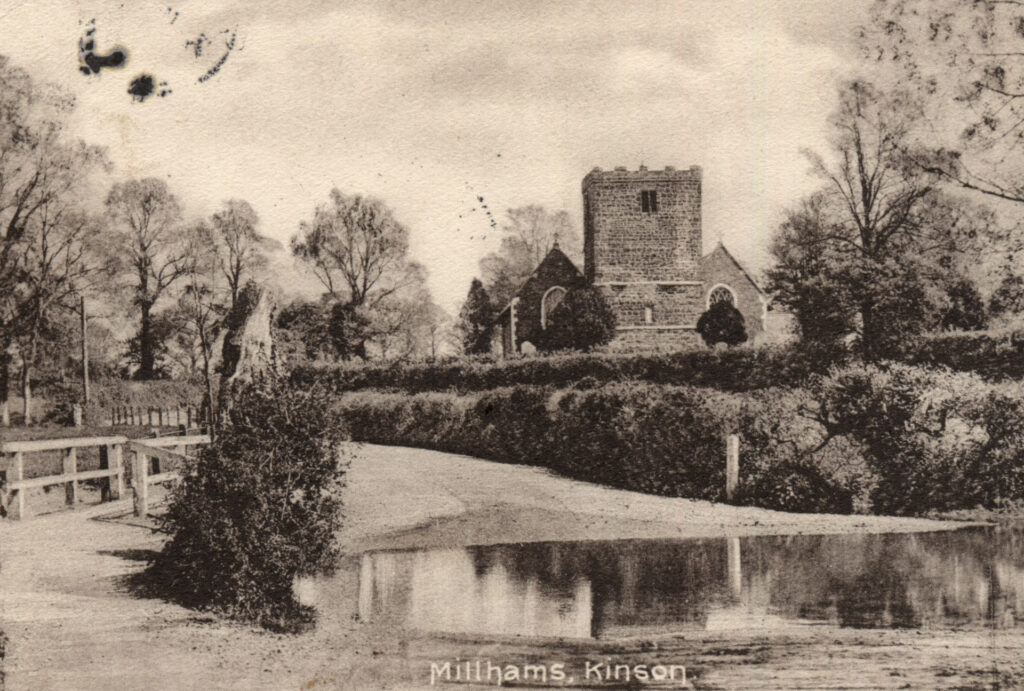
Charles was staying in Fish Street, Poole with the boot maker Charles Lane and his family on census night 1841. No occupation is given for him but he may have been an apprentice boot maker. Fanny was living with her father and sisters Elizabeth and Paulina (whom the enumerator has recorded as Eleanor) in Howe, Kinson. Fanny’s sister Mary was in service in Wimborne, and her sister Ann was living with Mary and Thomas Hicks also in Wimborne.
Circa 1845 Charles Lane and his family had moved to Southampton. Charles Troke did not go with them but went to sea as a landsman that year. He was ticketed as an Able Seaman in Poole on 9 Oct 1849 when it was noted that he was unable to write.
On census night 1851 Charles was living in Ensbury with his father and step-mother. Fanny and her father were living in Water Lane, Ensbury with Fanny acting as Housekeeper. Charles and Fanny married in Kingstone (Kinson) on 18 Nov the following year. The census of 1861 records Charles working as an agricultural labourer and living with Fanny and their children Mary, Louisa and William in West Howe. Ten years later Charles, Fanny and children Louisa, William, Harriet, Alice, Frederick and an as yet unnamed baby (later named Martin Luther after Fanny’s father) were living with Fanny’s uncle Thomas Hicks, a thatcher, in Kinson Village. Charles was still working as a labourer as he would do for the rest of his life. Mary had left home and was employed as a cook in Poole.
Thomas Hicks died in 1873. Fanny was his Executrix and beneficiary. He bequeathed Fanny two cottages adjacent to the Wesleyan Methodist Chapel in West Howe for her lifetime. After her death the cottages were to pass to Martin Luther Troke. The census in 1881 shows that Charles, Fanny, Harriet, Frederick and Martin were living in one of the cottages. Also living with the family was Charles and Fanny’s grandson Henry, the illegitimate son of their daughter Louisa. In 1891 Charles and Fanny were still in West Howe. Martin was living with them as was another grandson, William Medley, the orphaned son of their daughter Mary who had died in 1886.
After Fanny’s death on 15 Sep 1899 Charles went to live with his daughter Harriet and her husband John Warren, a general and shoeing smith, on the High Road (now Wallisdown Road) at Wallis Down. Charles died on 14 Oct 1906 and was buried with Fanny in St Andrew’s burial ground, Kinson. The memorial on their gravestone reads:
In loving memory of our dear mother the beloved wife of Charles Troke,
who fell asleep 15th September 1899, age 64.
Also of Charles Troke, died October 14th 1906 age 84.
Charles and Fanny had seven children.
Mary born 1853, married (1) William Medley 25 Dec 1873 (2) John Thomas Coakes Q4 1883, died 14 May 1886
Louisa born 1855, married Simeon Gale 1875, died 1926
William born 1858, married Emma Corbin 1878, died 1931
Harriet born 1861, married (1) John Warren 27 October 1883 (2) Sidney Benjafield Q2 1934, died May 1943.
Alice born 1864, married Alfred Lucas 1882, died 1950
Frederick born 1868, married Beatrice Bessant 1903, died 1905
Martin Luther born 1871, died 1926
Mary Troke 1853 – 1886 Great Grandmother of the author
Mary was born in Redhill. Her birth was registered Q4 and she was baptised in Great Canford on 11 December. The 1861 census shows her living with her family in West Howe. By 1871 Mary was the cook in the household of Charles Stone J.P., merchant, ship owner and manufacturer of hemp sacks, in New Street, St. James, Poole.

Mary married the fisherman William Medley in Kingstone ( now called Kinson) on 25 Dec 1873. The electoral roll shows that they lived in Lagland and Strand Streets in Poole before moving to the Quay in 1880 the year their son, William George Troke Medley, was born (the William George Medley born in 1876 was the son of William’s brother Joseph). William was baptised on 16 June.
The Medley’s were the living at the Hand and Heart Inn on the quay. The Hand and Heart Inn was a narrow, three story building situated behind the fish shambles on a part of the waterfront called Fish Deck. Fish Deck was built on land reclaimed in the 1830’s and the Fish Shambles was built at that time. The name Hand and Heart appears in the 1861 census so it was an inn before that date. The Inn had a steeply pitched roof and a curved front elevation. To this layman’s eyes the building looks like a converted warehouse with the curved elevation an addition. Although it was no longer in use as a inn an aerial photograph of Poole Quay taken circa 1920 (see later) shows what the building looked like.

A heart resting in an open palm is a symbol representing charity and is used by The Oddfellows Friendly Society. By the time the foundation stone was laid for an Oddfellows Hall at Hunger Hill on 8th September 1864 Poole had four lodges (Philanthropic, Good Intent, Good Samaritan and Alliance) with 800 to 1000 members. At that time three of the lodges were holding their meetings at inns or taverns. The name Hand and Heart suggests a connection between the inn and the Oddfellows and meetings may well have been held there.
The building originally belonged to the Guest family of Canford, Martons’s Dolphin Brewery took on a twenty-one year lease on the building in 1880, the year that the Medley’s moved in. Inns were open to the public and provided food, lodging (with a special obligation to provide billeting for soldiers) and entertainment. The Hand and Heart was also licenced to sell beer. The following map shows the location of The Hand and Heart and Fish Shambles relative to The Lord Nelson (which is still exists).

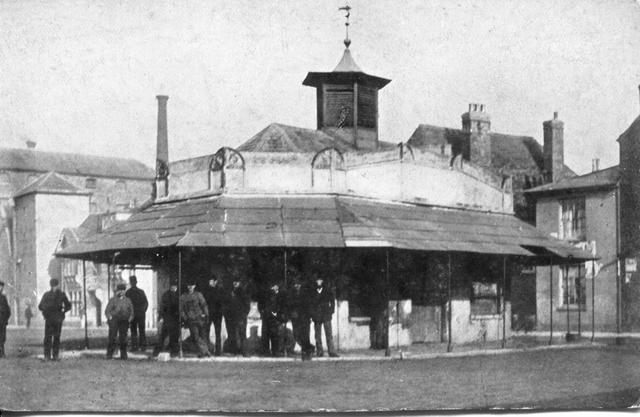
The Hand and Heart lost it’s beer license in 1906. The Fish Shambles was replaced with a Fish Market in 1914. Both buildings were demolished in the clearances of the late 1950s. Listen to the lament about the decline of the fishing industry ‘Man of Poole‘ by Out of Order.

William was described in the 1881 census as a Beer House Keeper living at The Hand and Heart. Also at the inn on census night (3 April) were William’s niece Annie Brown who was working as a domestic servant and two boarders.
After William Medley died on 26 Jul 1881 Mary continued at the Inn. She married another fisherman, the widower John Thomas Coakes, during Q4 in Poole. Their daughter Florence was born 18 Feb 1885. Tragically Mary died a little over a year later on 14 May 1886 at the inn in what, according to her family, were suspicious circumstances. The family maintained that John had pushed Mary down the stairs while John said that she fell. The death certificate gives the cause of death as meningitis. How meningitis was diagnosed in 1880s is unknown as is whether Mary was examined by a doctor before her death or whether the doctor decided meningitis was the cause based on John’s account of the fall. Mary’s death certificate had been obtained and the death registered by John Coakes within a day her death. Mary was buried on 19 May with her first husband, William Medley. Their memorial stone reads:
WILLIAM MEDLEY
THE BELOVED BROTHER OF
JOSEPH MEDLEY
WHO DIED JULY 26 1881
AGED 31 YEARS
STOP MY FRIEND A SHED A TEAR
THINK OF THE DUST THAT LIETH HERE
AS I AM SO YOU MUST BE
PREPARE FOR DEATH AND FOLLOW ME
ALSO OF MARY.
WIFE OF THE ABOVE
WHO DEPARTED THIS LIFE
MAY 14 1886 AGED 32
After her death Mary’s son William Medley was taken in by his grandparents Charles and Fanny Troke whilst young Florence, the author’s grandmother, was raised by her aunt Harriet and her husband John Warren and had no further contact with her father.
In Q3 1886, just a few weeks after Mary’s death, John Coakes married Harriet Vincent (no relation) in Poole.
William Troke 1858 – 1931 My great great-uncle
William married Emma Corbin in Kinson on 7th December 1878, In 1911 he was a coal merchant living in Canford Road, Wallisdown. In 1918 their youngest son, Willie Alfred Troke was killed when HM Drifter New Dawn (tender to HMS Magpie) hit a mine off the Isle of Wight. Willie was aged just 18.
Harriet Troke 1861 – 1932 Great great-aunt of the author and carer of Florence Coakes
Harriet was born on the 19th August 1861 and baptised in Great Canford on 11th October. She worked as a domestic servant until her marriage to John Warren 27 October 1883. Harriet and John had no children of their own but after the death of Harriet’s sister Mary, they took in their one year-old niece Florence. In Highmoor Harriet ran a laundry and employed women from the village. Harriet remarried after John’s death. Q2 1934 she married Sidney Benjafield a retired plasterer. In 1939 they were living in Canford Road, Highmoor. Sidney died in 1941 and Harriet 16th May 1943.