
A Tale of Two Brothers
James and Thomas Hicks were the sons of William Hicks (1759 – 1841) and Mary Maidment Tizzard (? – 1804). They had a sister Jane born in 1803. Thomas Hicks was married to my Great x4 Aunt Mary Downton.
James Hicks c1798 – ?
James Hicks was born in Wimborne where he married Rebecca Rose in 1824. James and Rebecca had four children Rebecca JANET born 1825, Caroline born 1827, Mary born 1829 and John William born 1834.
Sometime between Mary’s baptism at the end of 1829 and John’s birth in 1834 James and Rebecca moved to Burley Ville in the New Forest. Rebecca died in 1837 after which James took up with Ann Ayles. They had a son James, baptised 1839, and a daughter Rebecca baptised 1841.


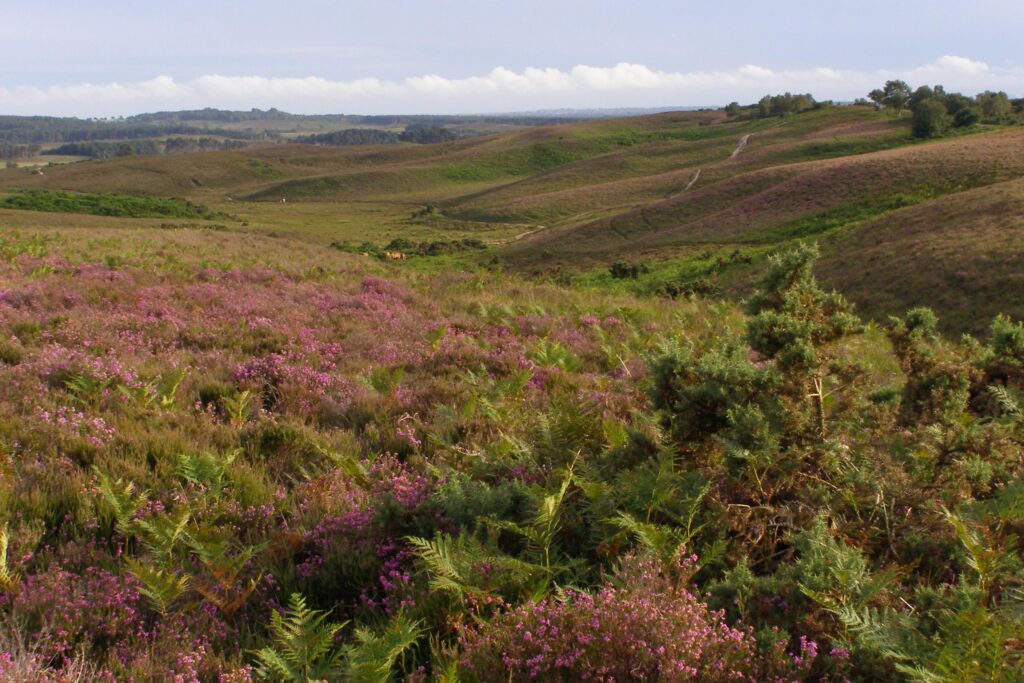
The 1841 census records James farming at Vereley, a couple of miles north of Burley. Vereley was situated in the heartland of the New Forest smuggling operations. It was a short distance from Smugglers Road, not far from the homes of the infamous Warne siblings (see note below) who were living in Crowe in 1841 and just to the south west of Ridley Wood where a market was held and where, no doubt, it was possible to buy contraband goods. It was from Vereley Hill that Love [aka Lovey] Warne was reputed to have used the inner scarlet lining of her cloak to signal when there were revenue men in the area. Love Warne was farming at Hurn on the opposite side of Smugglers Road by 1851. It would seem highly likely that James was involved in the smuggling trade in some way. A theory supported by later events.
At the Lent County Session in 1845 James and Ann were charged with receiving a pig which they knew to be stolen. They were acquitted on the direction of the judge because the indictment omitted to state the nature of the offence with which they were charged. George Philpott was sentenced to seven years deportation and Archibald Gray to twelve months imprisonment for stealing two fat pigs. James August was sentenced to seven years transportation for receiving the other pig.
After their acquittal and realising that it was only a matter of time before they were re-arrested James and Ann fled. James had the contacts and resources to be able to relocate his family to Jersey once again suggesting that he had contacts with the smuggling fraternity. A warrant was issued for their arrest at the Michaelmas Hampshire County Sessions and Superintendent Peter Gow was charged with arresting them. Arriving in Burley he discovered they had left the area and was unable to obtain any information about their whereabouts from the tight-lipped residents.
James and Ann were married in St Helier on 10th October 1845 and their son Harry Albert was born on 12th December. Harry was baptised on 18th January the following year.
Back in England Peter Gow had not forgotten about the Hicks’ and in 1847 he got word that they were in Jersey. Gow travelled to the island and took them into custody. At the Michaelmas Sessions James and Ann were found guilty of receiving a stolen pig. James was sentenced to 14 years transportation and Ann to six months (as reported in the press) or six weeks (according to the Southampton Court Prison Register) imprisonment. Mr Poulden who had acted for the Hicks’ in the first trial led the prosecution in the second.
It is not known where Ann was imprisoned but she returned to Jersey after her release. The 1851 census recorded that she was a ‘landed proprietor’ suggesting that whatever James had been involved with was profitable.
Convicted on 18th October James was transferred from Winchester to the prison hulk Stirling Castle in Portsmouth on 16th November. Not all prisoners sentenced to transportation were actually transported and James served his sentence in England. At some time he was transferred from the hulk to Milbank Prison then, on 9th July 1851, to Dartmoor. His behaviour in Milbank was recorded as having been good. It is not known what happened to James after this date. Ann was a widow living in Jersey in the 1861 census so it is probable that he died whilst in prison.
James’ daughter Caroline married Thomas Ellis a joiner and, ironically, emigrated to Australia. His daughter Rebecca married Peter le Manquais in Jersey in 1862 and emigrated to the US.
Thomas Hicks 1801 – 1873
Thomas Hicks was born in Wimborne in 1801. A thatcher by profession Thomas married Mary Downton in Lytchett Matravers on 6th February 1827. Thomas and Mary had no children of their own but were actively involved with the care of their nieces and nephews.
On 4th March 1830 Thomas signed an Indenture with Henry Bankes of Kingston Hall for the lease of a cottage with an orchard and garden amounting to ¾ Acre at Chilbridge in the Tything of Abbottstreet, part of the Manor of Kingston Lacy. £55 pounds was paid for a lease on the lives of Thomas, his wife Mary and 12 year-old nephew John Downton, son of Mary’s brother Joseph, for and during the life of the longest lived of them. A yearly rent of Five Shillings and six pence free of all Taxes or other deductions, was to be paid by equal portions, on the twenty fifth of March, and the twenty ninth of September. But it appears that John Downton did not stay with the Hicks’ for long. On 3rd March 1835 he was sentenced to 1 year hard labour in the Bridewell for uttering (putting into circulation) a counterfeit Half Crown in Fordingbridge on 25 January 1835. The 1841 and 1851 censuses show John living with his parents in Kingston, Ringwood where Joseph was a dairy farmer of 148 acres employing four labourers. Kingston is just to the south of Crowe and barely four miles from the home of Thomas’ brother James Hicks at Vereley.
Thomas and Mary were Wesleyan Methodists. To be a member of a Methodist Society required much more commitment than simply attending Chapel on a Sunday. Each Society was divided into classes. These were groups which met weekly to provided support and encouragement to the members. Readers who would like to know more are recommended to read the excellent The History and Significance of the Wesleyan Class Meeting – Holy Joys by Jon Earls.
Thomas was recorded as a Class Leader in the Wimborne Methodist Chapel in 1836. The other leaders were: Peter Hawke, John Hatchard, Sarah Alexander and Charles Russell Eyers. The names of members in their classes are given but, frustratingly, those of Thomas’s class are not. Members of the Wimborne Society included Charles Downton (cousin of Mary Downton), his wife Susan and mother Dinah Gale; John Downton (Mary Downton’s father); John and Eliza Wayman (siblings of William Wayman a beneficiary in Jane Downton’s will) and John’s wife Ann Wayman. (Source: Wesleyans in Wimborne by Barbara Marriott pub. 1996)


Mary’s sister Fanny had died in 1835 leaving five young daughters. The 1841 census shows that one of the girls, Anne Luther was living with them in Hill Butts, Wimborne. Also living with them were Mary’s father John Downton and the carpenter John Lane and his wife Jane. They may still have been living in the cottage leased from Henry Bankes. Hill Butts is just to the south of Chilbridge and the two are connected by Chilbridge Lane. Another of the Luther girls, Mary, was employed as a female servant in the home of Eleanor Braffett in West Borough, Wimborne.
During the 1840’s the Hicks’ moved to Kinson where both of them were related by marriage to local family the Luthers. Mary’s sister Fanny married Martin Luther in 1824 and Thomas’s uncle Robert married Joanna Luther in 1785. (When the 1841 census was taken Robert Hicks was living at Pope’s Moor which was close to the Bothenwood home of John Coakes.)
The 1840s also saw Thomas’ brother James Hicks convicted for receiving a stolen pig and his son John William Hicks coming to live with Thomas and Mary to train as a thatcher.
In 1851 Thomas and Mary were living in Lockyers which was between Kinson Farm and the village. Living with them were their niece Anne Luther and nephew John Hicks.
Thomas and Mary were still living in Kinson in 1861. Unfortunately the enumerator didn’t distinguish whereabouts in the village people were living but they were probably still at Lockyers.
In 1861/2 Thomas bought two cottages in West Howe from the widow and eldest son of William RICHARD Frampton, Shoemaker who died early in 1861. He bought the northernmost one first.
An Indenture for the conveyance of the second of the properties, dated 13 March 1862, is held at the Dorset History Centre in Dorchester. The conveyance is of a piece of Land Cottage and premises purchased from Richard’s widow Maria (who had a dower interest in it) and his son and heir Thomas to Thomas Hicks for the sum of nineteen pounds. The plot was described as being about forty perches with a dwelling house. It was bounded on the south and east by land owned by Sir Ivor Bertie Guest, on the west by Poole Lane and on the north by the premises and garden of Thomas Hicks which had previously been owned by William [Richard] Frampton.

A chapel with a thatched roof was built in the garden of this second property between the cottage and the road. It was registered as a place for public worship in 1863 and opened on May 26th of that year. On 8th June 1863 Thomas Hicks sold the chapel, with the approval of The Reverend John Killick, for one pound sterling to a group of Trustees. Thomas retained ownership of the cottages but remained living in Kinson.
Mary died in 1866. No death registration record has been found for her but she was buried in Kinson on 5th June 1866.
Living with Thomas in Kinson in 1871 were his niece Fanny, her husband Charles Troke and their six youngest children including an unnamed newborn (Martin Luther Troke). Thomas’ sister Jane Habgood was visiting them and Jane Downton was living next door.
Thomas died on 30th May 1873. Fanny Troke was his executor. Fanny was also the main beneficiary of his will receiving all of his household goods and effects and a lifetime interest in the two cottages that he owned adjacent to West Howe Chapel. After her death the cottages were to go to her son Martin Luther Troke.
This is the last Will and Testament
of me
Thomas Hicks of Kinson in the County of Dorset Thatcher. I direct the payment of my just debts funeral and testamentary expenses to be made by my Executrix hereinafter named I give devise and bequeath unto my Niece Fanny Troke All my household furniture and effects now in and about the premises occupied by me I also give devise and bequeath unto the said Fanny Troke two freehold Cottages situate at West Howe adjoining the Wesleyan Chapel to hold the same for her life and after her decease I bequeath the same to Martin Luther Troke of Kinson aforesaid his heirs executors administrators or assigns And I appoint Executrix the said Fanny Troke sole Executrix In witness whereof I have hereunto set my hand this first day of May One thousand eight hundred and seventy three
Thomas Hicks
Signed by the said Testator as his last Will and Testament in the presence of us present at the same time who at his request in his presence and in the presence of each other have subscribed our names as witnesses
George Francis White
George Curtis
Proved at Blandford on the 30th May 1873 by the Oath of Fanny Troke (Wife of Charles Troke, Laborer [sic]) Niece of the deceased the sole Executrix to whom administration was granted.
The Testator Thomas Hicks was late of Kinson in the County of Dorset Thatcher and died on the 4th day of May 1873 at Kinson aforesaid
Under £100 Messrs Aldridge and Harker
Solicitors. Poole
Two Brothers – Next Generation
John William Hicks 1834 – 1916
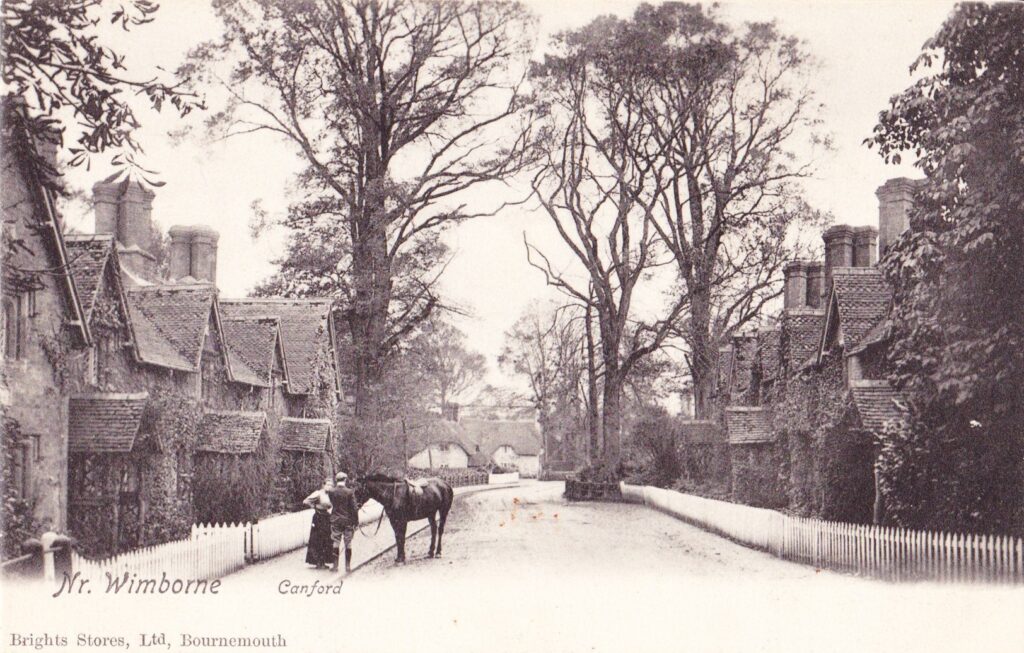
John William Hicks, son of James Hicks and Rebecca Rose, was born in Burley Ville in the New Forest. It is not known whether or not John went to Jersey with his family or when he went to live and work with his uncle but he was living with his uncle Thomas Hicks by 1851. John remained in the Kinson area working as a thatcher and carpenter for the rest of his life. He married Susan Elizabeth Veal, daughter of a retired excise man, in Kinson on 4 Oct 1859. Between 1883 and 1898 John was employed to add rustic porches to estate cottages at Canford Magna. Each porch was different and was constructed from branches and twigs which were then either thatched or tiled. His son Walter John Hicks followed in his footsteps and became a thatcher.
James Hicks 1839 – ?
James Hicks the son of James and Ann Ayles remained in Jersey after his parents’ conviction. He became a cabinet maker but aged 19 he received a second conviction for theft and was sentenced to seven years transportation. Like his father before him he served his sentence in England. James spent 7 months 10 days in Millbank Prison and 30 months and 10 days in Portland, Dorset after which he was discharged on license on 10 September 1862. What became of him is unknown.
More about Love Warne and her brothers
Love Warne was the daughter of Peter Warne and Sarah Titford who married in Eling on 13 November 1783. Her brother John was baptised on 1 April 1785. Peter, Love (Lovey in the baptismal register) and another sibling, Sally Sophia, were all baptised on Christmas Day 1796.
Love and her brothers were active in the smuggling trade. Peter and John are believed to have been landsmen transporting the goods inland from the coast. Love is said to have transported silks and lace inland wound around her body underneath her clothing and also to have used her cloak lining to signal when Excise Men were in the vicinity.
At the time of the 1841 census John, Peter and Love were living in Crow. Both brothers gave their occupation as maltsters. Love was living with her brother Peter and their great niece, eight year-old Love Lainson, Love Lainson was John’s grand-daughter and was probably being cared for by her great aunt as her mother Eliza had died at the end of 1834. Love senior obviously did a good job because in 1851 Love Lainson was a School Mistress in West Moulsey while Love Warne herself was a farmeress [sic] at Hurn Farm to the north of Knaves Ash, Burley.
In 1851 John and Peter were also farming. John was a farmer of 50 acres in Crow and Peter of 10 acres also in Crow. John died early in 1858 and was buried in Burley on 23rd February. In 1861 Peter was recorded as a former maltster living on Crow Hill. He died at the beginning of 1870 and was buried on 15th January.
Love was still at Hurn in 1861 but by 1871 was an Annuitant living at Half Way, Crowe. She died at Neaves Ash (Knaves Ash) on 12 Oct 1872. Although her effects were valued at less than £5 Love left a will and probate was granted to Harry Dear Holloway, Land Surveyor, on 26 Jun 1873. Love bequeathed £2 to Railway Gateman George Blandamer of Crowe “in consideration of the many acts of kindness rendered by him unto me” and £1 to her niece Love Pople (Lainson) of West Moulsey.